
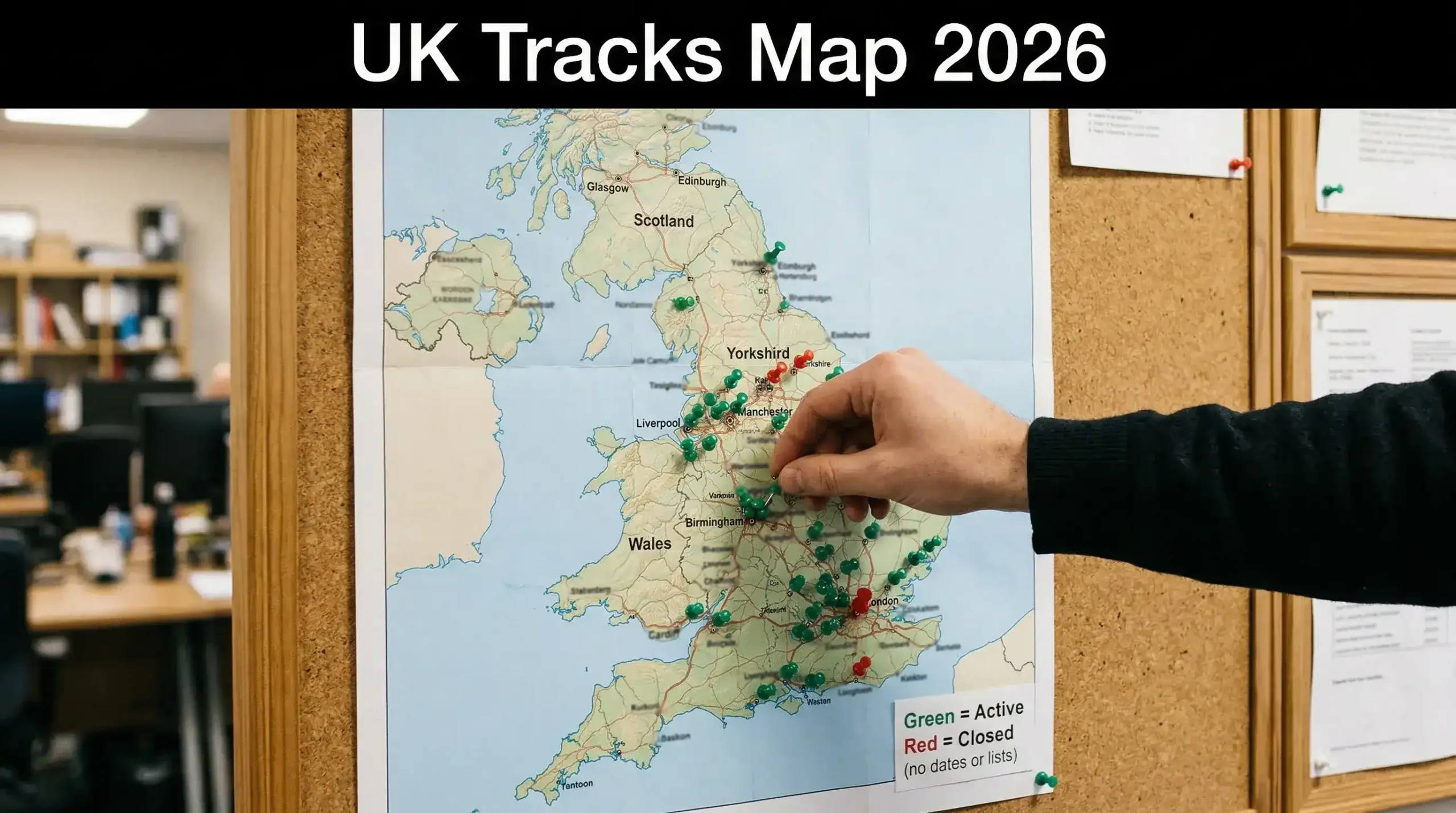
The map of UK greyhound racing looks different every year, and 2026 is no exception. Tracks close, new ones occasionally open, and the network that once covered the country from Scotland to the south coast continues to contract. As of early 2025, there were 18 licensed GBGB stadiums operating across Great Britain — a number that has shifted further with the closure of several venues and the opening of Dunstall Park. To put that figure in perspective, there were 77 licensed tracks in the 1940s and more than 200 if you included the independent flapping circuits. The wider context is set out in our Monmore Green results guide.
For bettors, the shrinking track map has practical implications. Fewer venues means fewer fixtures, fewer dogs in the grading pool, and a more concentrated racing product. It also means that the remaining tracks — including Monmore Green — carry greater importance within the fixture schedule. This guide provides a complete list of licensed GBGB tracks for 2026, documents the recent closures that have reshaped the landscape, and places Monmore within that evolving picture.
Every Licensed GBGB Track in 2026: The Complete List
The licensed GBGB track network in 2026 is concentrated in England, with no venues currently operating in Scotland or Wales. The tracks span from Newcastle in the north to Brighton in the south, with clusters around London, the Midlands, and the North West. Each venue operates under GBGB regulation, which means standardised rules, grading systems, welfare protocols, and stewards oversight.
In London and the South East, the remaining tracks include Romford, Crayford’s slot was vacated in January 2025, and the region relies on the Essex and Kent venues that survived the latest wave of closures. Central Park in Kent and Henlow in Bedfordshire provide additional coverage in the outer Home Counties. The southern coastal venue at Brighton and Hove remains one of the sport’s most distinctive tracks, with its unique seafront location drawing visitors who might not otherwise attend greyhound racing.
The Midlands is now a two-track region following the closure of Perry Barr in August 2025 and the opening of Dunstall Park within Wolverhampton Racecourse the previous month. Monmore Green and Dunstall Park operate a few miles apart in Wolverhampton, making the city the only location in the UK with two licensed greyhound tracks. Hall Green in Birmingham continued operating through the 2025 closure wave but faces its own long-term uncertainty as the West Midlands greyhound landscape consolidates.
The North West hosts tracks at Belle Vue in Manchester and at Doncaster, while the North East is served by Newcastle and Sunderland. Yorkshire has Sheffield, one of the larger tracks in the network. These northern venues are important for maintaining geographic coverage in a sport that has historically been concentrated in London and the Midlands — without them, greyhound racing would become an almost exclusively southern English activity.
The Nottingham track at Colwick Park provides East Midlands coverage, while Swindon’s closure in 2025 left the South West without a licensed venue. The loss of Swindon was particularly significant because it was the last independent track in the UK — the final venue not owned by either Entain or another corporate operator. Its closure marked the end of an era in which independent promoters could sustain a licensed greyhound operation without corporate backing.
Each of these tracks runs its own fixture schedule, coordinated through the BAGS system for afternoon meetings and independently for evening cards. The Premier Greyhound Racing network covers nine of the venues, including Monmore, while the remainder operate under separate arrangements. For bettors, the practical consequence is that on any given day, several tracks will be staging live racing simultaneously, and the results from each feed into the national form database that informs selections across the entire network.
Tracks Lost in 2025: Crayford, Perry Barr, Swindon and More
The year 2025 was brutal for UK greyhound tracks. Three significant closures reshaped the landscape and reduced the number of licensed venues in a single year by a margin that would have seemed unthinkable a decade earlier.
Crayford closed in January 2025, an Entain decision that removed one of the busiest tracks in the South East from the fixture rota. The stadium, which had been a fixture of Kent greyhound racing for decades, was deemed commercially unviable under the PGR model. Its closure displaced trainers and dogs who had been based at the venue, many of whom transferred to other tracks in the network.
Perry Barr in Birmingham closed in August 2025, ending greyhound racing at one of the Midlands’ most historic venues. The closure was partially offset by the opening of Dunstall Park in Wolverhampton the previous month, which absorbed some of Perry Barr’s fixture schedule and grading pool. For Midlands-based trainers and racegoers, the transition represented a geographic shift — from Birmingham to Wolverhampton — rather than a total loss of local racing, but the emotional impact of losing Perry Barr was significant for a community that had supported the track for generations.
Swindon’s closure ended the last independent licence in UK greyhound racing. The track had operated outside the corporate ownership structures that control most venues, and its demise confirmed that the independent model is no longer commercially sustainable in the current environment. The South West was left without licensed greyhound racing, forcing punters and trainers in the region to travel to the Midlands or South East for their nearest track.
Scotland also lost its last licensed track in 2025, completing the sport’s withdrawal from a nation where legislative pressure — a bill to ban greyhound racing on oval tracks was introduced in the Scottish Parliament in April 2025 — had made the operating environment increasingly hostile. Wales, which announced its intention to ban greyhound racing in February 2025, has no licensed tracks and the proposed legislation would ensure that situation remains permanent.
Where Monmore Sits in the Current UK Landscape
Within the 2026 UK greyhound track map, Monmore Green occupies a stronger position than it did five years ago — not because the stadium itself has changed dramatically, but because the landscape around it has contracted. With fewer tracks operating nationally, each surviving venue carries more weight in the fixture schedule, more importance to the trainers who rely on it, and more relevance to the betting market that funds the sport.
Monmore is one of nine PGR tracks, which gives it access to centralised media distribution, coordinated fixture planning, and the investment in open racing prize money that PGR has delivered. Its location in the West Midlands, alongside Dunstall Park, makes Wolverhampton one of the densest greyhound-racing hubs in the country. For bettors, Monmore’s prominence in the national fixture schedule means that data from the track feeds into a wider analytical framework — form earned at Monmore is referenced by punters at tracks across the UK, and results from other venues inform selections at Monmore in return. How Monmore compares is in Monmore against other tracks.
The broader trend is clear: fewer tracks, a more concentrated product, and a sport that is slowly retreating toward its commercial centres. Monmore is one of those centres, and its survival through nearly a century of industry contraction suggests it will remain part of the UK greyhound track map for the foreseeable future.
