
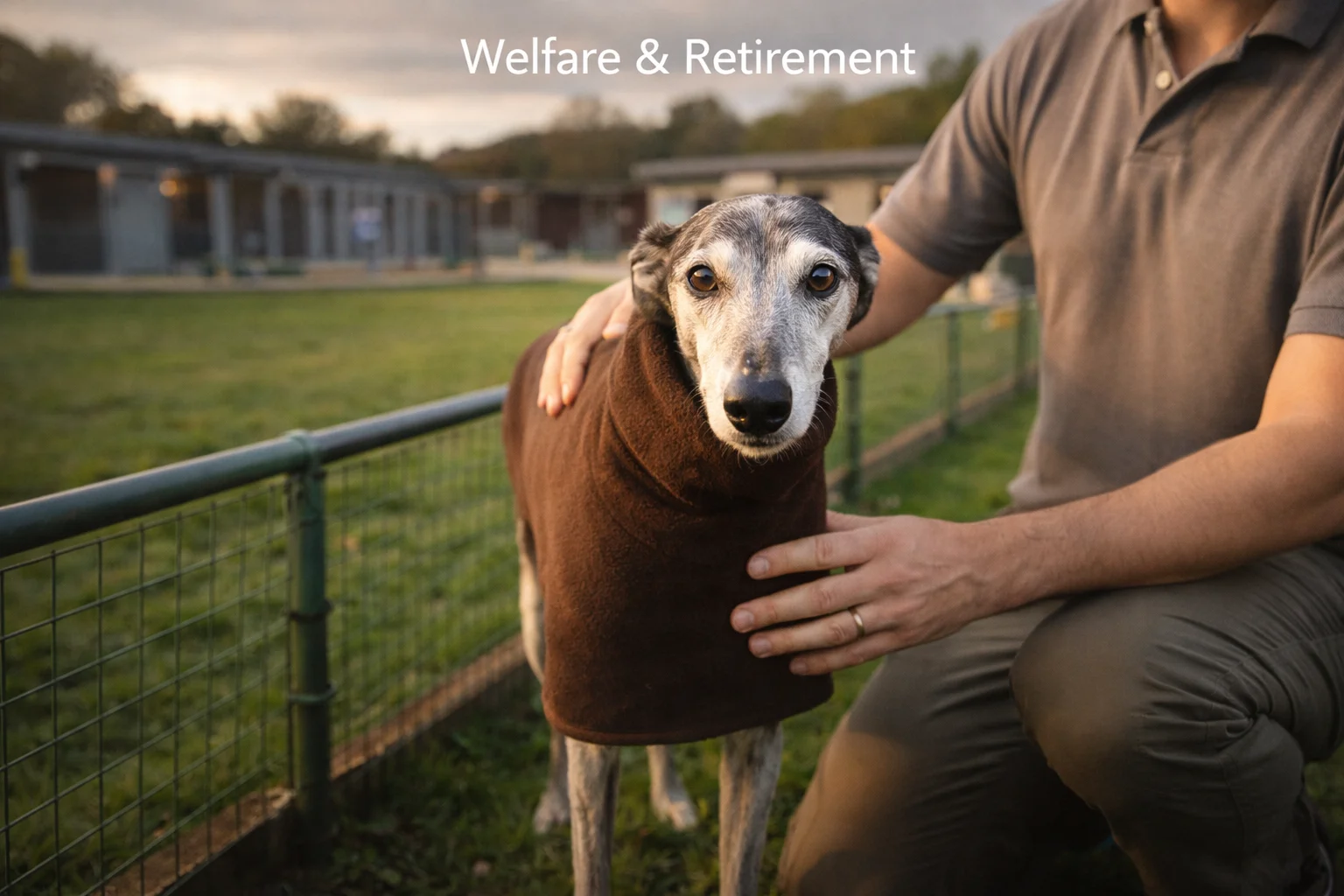
Greyhound welfare is the issue that divides opinion on the sport more sharply than anything else. Critics point to injury totals and argue that racing is inherently dangerous for the dogs. Supporters cite improving statistics and increasing investment to argue that the sport has reformed itself. The data sits between those positions — neither as bleak as the campaigners claim nor as clean as the industry would like — and understanding it properly requires looking at the numbers without an agenda. The wider context is set out in our Monmore Green results guide.
The most recent full-year dataset comes from GBGB’s 2024 reporting period, which covers all licensed greyhound racing in Great Britain. The headline figure is an injury rate of 1.07 percent — 3,809 injuries from 355,682 individual race starts. That is the lowest rate since GBGB began publishing this data, and it represents a measurable improvement on previous years. Whether that improvement satisfies you depends on your starting assumptions about acceptable risk, but the trajectory is undeniably downward.
This guide examines the 2024 greyhound welfare data across three areas: injuries, retirement outcomes, and the funding structures that underpin the sport’s welfare commitments.
Injury Rates in 2024: The Lowest on Record
The 1.07 percent figure is a rate, not an absolute count, and it is important to understand what it encompasses. The data covers every race start at every licensed GBGB track during the calendar year. Each time a greyhound leaves the traps counts as one start, and any injury reported by the attending veterinarian counts as one incident. To put the percentage in practical terms: for every hundred race starts at a licensed UK track in 2024, approximately one resulted in a recorded injury.
The definition of “injury” in GBGB’s data is broad. It includes everything from minor muscle strains that require a few days’ rest to serious fractures that end a racing career. Not all injuries are equal in severity, and the 1.07 percent figure does not distinguish between a dog that misses one race due to a minor knock and one that is permanently retired with a broken hock. GBGB publishes additional breakdowns by injury type and severity, but the headline rate is the most widely cited and the most useful for year-on-year comparison.
Track fatalities are reported separately. In 2024, the on-track fatality rate stood at 0.03 percent, representing 123 deaths across those 355,682 starts. That rate has halved since 2020, when it was 0.06 percent. The reduction reflects improvements in track surface management, veterinary provision at meetings, and the introduction of stricter safety protocols at GBGB-licensed venues. Each fatality is investigated, and tracks with above-average incident rates face regulatory scrutiny.
Critics of greyhound racing — notably GREY2K and the League Against Cruel Sports — present the data in aggregate rather than percentage terms. Between 2017 and 2024, they report more than 35,000 injuries and over 1,300 fatalities across UK tracks. Those cumulative numbers are accurate and represent real suffering. The debate is not about the numbers themselves but about whether a declining rate of harm is sufficient grounds for the sport to continue, or whether the absolute volume of injuries makes the activity ethically indefensible regardless of the trend direction.
For anyone assessing the greyhound welfare data honestly, both perspectives contain truth. The sport has made measurable progress. The sport still produces thousands of injuries per year. Whether that combination justifies licensed greyhound racing is a judgement call, not a data question, and reasonable people land on different sides of it.
Where Retired Greyhounds Go: Adoption and Rehoming Data
What happens to greyhounds after their racing career ends is arguably the most emotionally charged aspect of the welfare debate. The 2024 GBGB data offers some encouragement: 94 percent of greyhounds leaving the sport were successfully rehomed, either through the Greyhound Retirement Scheme, approved rehoming charities, or directly by their trainers and owners. That 94 percent figure compares favourably with the 88 percent recorded in 2018, the first year of GBGB’s comprehensive welfare strategy.
The most striking single statistic in the retirement data concerns economic euthanasia — the practice of putting a greyhound down because its owner or trainer considers the cost of retirement or veterinary treatment to be unjustifiable. In 2018, 175 greyhounds were euthanised for economic reasons. By 2024, that number had fallen to 3 — a reduction of 98 percent. GBGB has been explicit that economic euthanasia is unacceptable, and the near-elimination of the practice is one of the clearest markers of progress in the welfare data.
The rehoming process works through a combination of dedicated schemes and independent charities. The Greyhound Retirement Scheme, funded by GBGB and administered through approved rehoming centres, provides a financial contribution for each greyhound that enters the programme. Charities such as the Retired Greyhound Trust, local rescue organisations, and breed-specific adoption groups also absorb retired racers. The 94 percent rehoming rate includes all of these channels.
The remaining six percent includes dogs that die in kennel, are euthanised on veterinary advice due to untreatable conditions, or whose post-racing outcome is not recorded. That gap in the data — however small — remains a point of criticism, because any greyhound unaccounted for represents a potential welfare failure. GBGB has acknowledged this and has tightened its reporting requirements for trainers to reduce the number of dogs whose retirement outcome is unknown.
One factor that complicates the retirement picture is the international pipeline. Many greyhounds racing in the UK were bred in Ireland and imported specifically for racing. When their careers end, some are returned to Ireland, where they may enter a different rehoming system with different standards. GBGB’s 94 percent figure covers dogs that retire within the UK system, but tracking outcomes for dogs that leave the country is inherently harder. The tightening of cross-border regulations and the decline in Irish imports — down 26 percent since 2021 — may gradually reduce this complication, but it remains part of the welfare landscape.
Funding the Safety Net: BGRF, GRS and the Money Behind Welfare
Welfare improvements cost money, and the financial architecture behind UK greyhound welfare is more complex than most racegoers realise. The primary funding channel is the British Greyhound Racing Fund, which collected £6.75 million in the 2024-25 financial year from voluntary contributions by bookmakers. That contribution is calculated as 0.6 percent of greyhound betting turnover — a percentage that sounds small but represents a significant revenue stream that funds prize money, welfare initiatives, and regulatory infrastructure.
The Greyhound Retirement Scheme operates as a specific welfare instrument within this framework. In 2025, GBGB increased the GRS financial bond from £400 to £420 for each greyhound entering retirement through the scheme. That bond covers the cost of veterinary checks, neutering, and initial rehoming support. In the first half of 2025, adoptions from GRS-approved centres increased by 37 percent compared to the same period in 2024 — a rise that reflects both improved promotion of the scheme and growing public interest in greyhound adoption. What happens after racing is in greyhound adoption.
The challenge for the welfare funding model is sustainability. Greyhound betting turnover has been declining, and the BGRF’s income has followed. If turnover continues to fall, the money available for welfare investment will shrink at exactly the moment when public expectations for animal welfare standards are rising. The current data shows a sport that has invested meaningfully in welfare improvements and produced measurable results. Whether that investment can be maintained against a backdrop of declining revenue is the question that will shape the next decade of greyhound welfare data.
