
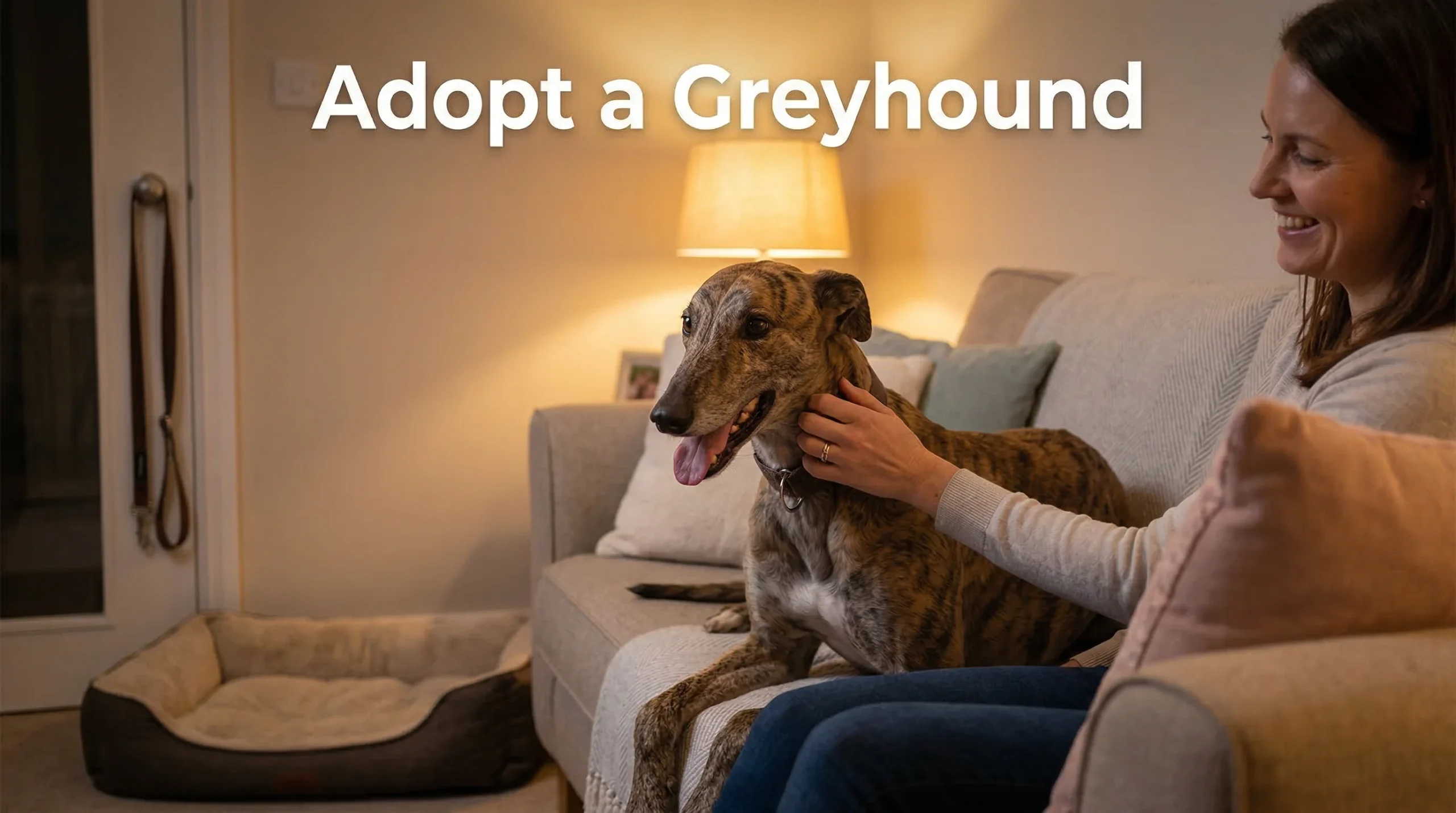
Every greyhound that races at Monmore Green will eventually stop racing. Some retire because of age, others because of injury, and a few because their form has declined to the point where continued competition is not in their interest. What happens next — after the final race — is arguably the most important chapter in each dog’s life, and it is one that the industry has invested heavily in improving over the past decade. The wider context is set out in our Monmore Green results guide.
The headline figure is encouraging: 94 percent of greyhounds leaving the sport in 2024 were successfully rehomed, compared with 88 percent in 2018. That improvement reflects a combination of better funding, stronger regulatory requirements, and growing public demand for retired greyhounds as pets. For anyone in the Wolverhampton area thinking about adopting a Monmore greyhound, this guide explains how the retirement system works, where to find local rehoming centres, and what to expect from life with an ex-racer.
The Greyhound Retirement Scheme: How It Works
The Greyhound Retirement Scheme is the primary mechanism through which retired racing greyhounds move from the track to the home. Administered by GBGB and funded through industry levies, the scheme provides a financial bond for each dog that enters the retirement process through an approved rehoming centre. In 2025, that bond was increased from 400 to 420 pounds per greyhound, covering the cost of veterinary checks, neutering, dental assessment, and initial care before the dog is placed with a new owner.
The system works through a network of approved rehoming organisations spread across the UK. When a trainer decides that a dog is ready to retire — whether due to age, injury, or declining form — the dog is transferred to one of these centres. The centre assesses the dog’s temperament, health, and suitability for different types of homes, then matches it with a prospective adopter. The process typically takes a few weeks, during which the dog acclimatises to domestic life, learns basic household manners, and is assessed for its compatibility with children, other dogs, and cats.
The financial improvement in the scheme has coincided with a surge in demand. In the first half of 2025, adoptions from GRS-approved centres rose by 37 percent compared with the same period in 2024. That increase reflects both better promotion of greyhound adoption and a genuine shift in public perception. Retired greyhounds have gained a reputation as gentle, low-maintenance pets — a reputation that, in the experience of most adopters, is well earned.
Trainers bear an important responsibility within the scheme. GBGB requires trainers to account for every dog in their care, and the post-racing destination of each greyhound is recorded and monitored. This traceability has tightened considerably in recent years: a trainer who cannot demonstrate that a retired dog has been placed through the GRS or an equivalent approved channel faces regulatory consequences. The system is not perfect — a small percentage of dogs still fall through the cracks — but the direction of oversight is clearly toward full accountability.
For dogs that cannot be rehomed through the standard process — those with behavioural issues, chronic health conditions, or temperament challenges that make domestic placement unsuitable — the scheme provides alternative pathways. Some are placed in sanctuary environments where they live out their lives in kennel-based care. Others may be returned to the breeding farm. The aim is that no retired greyhound is left without a plan, though the practical reality of achieving this for every single dog across a national industry remains a work in progress.
Rehoming Centres Near Wolverhampton
The West Midlands has several organisations that rehome retired greyhounds, making adoption accessible for anyone in the Monmore area. These range from large, nationally recognised charities to smaller, locally operated rescue centres that specialise in greyhound breeds.
The Retired Greyhound Trust is the largest greyhound-specific rehoming charity in the UK, with branches operating across the country. The Trust works closely with GBGB and accepts dogs from tracks including Monmore. Prospective adopters can register their interest through the Trust’s website and will be matched with a dog based on their living situation, experience, and preferences.
Local rescue organisations in the West Midlands also handle greyhound rehoming, often as part of a broader portfolio of breed rescue work. These smaller centres can offer a more personalised matching process and may have dogs available more quickly than the national charities, though their capacity is limited by funding and volunteer numbers. Contacting these centres directly is the best way to find out what dogs are currently available and what the adoption process involves.
Some Monmore trainers handle the rehoming process themselves, placing retiring dogs directly with families they know or with adopters who have approached them through the track community. This informal channel operates alongside the official scheme and can work well when the trainer knows both the dog and the adopter. However, it lacks the structured assessment that formal rehoming centres provide, which means adopters taking this route should invest time in understanding the dog’s background, health status, and behavioural tendencies before committing.
Life With an Ex-Racer: What New Owners Should Know
Retired greyhounds are not like other dogs, and understanding their background helps new owners avoid surprises and build a successful relationship from the start.
The most common observation from first-time greyhound owners is how calm these dogs are. Racing greyhounds are athletes, but their training regimen involves long periods of rest punctuated by short bursts of intense activity. This pattern carries over into retirement: most ex-racers are content to sleep for large portions of the day, need only moderate exercise, and are generally quieter and less demanding than many other breeds. The notion that a retired racing dog requires hours of running is a myth — two twenty-minute walks per day is typically sufficient. The figures behind it are in the welfare data.
Socialisation is the main adjustment challenge. Racing greyhounds have lived in kennel environments surrounded by other greyhounds, but they may have limited experience with other dog breeds, cats, children, or household objects like stairs, mirrors, and televisions. Most adapt quickly, but the first few weeks require patience as the dog learns to navigate an environment that is entirely new to it. Rehoming centres assess each dog’s tolerance for different stimuli, and their guidance on home suitability should be taken seriously.
The progress the industry has made in reducing economic euthanasia — from 175 cases in 2018 to just 3 in 2024, a 98 percent reduction — means that virtually every retired Monmore greyhound now has the opportunity to live out its life in a home rather than being destroyed because nobody wanted it. Adopting a Monmore greyhound is not just acquiring a pet. It is completing a journey that started in the traps and ends on your sofa, and for the thousands of families who have taken that step, the experience has been overwhelmingly positive.
